Meet The Knobbers (or MTK) is an organization that aims to spread the culture of electronic music and technology in Italy.
The MTK crew , I’m a proud member and founder of it, works to organize meetings, live shows, and workshops.
This is the MTK 2012 Synth meeting documentary.
game consolles and circuit bending
game consolles and circuit bending, meetings & events, modulars, music, videos
Meet The Knobbers 2012
by synthvibrations • • 0 Comments
game consolles and circuit bending, videos
Casio SA-5 bent with leds and 8 mods
by synthvibrations • • 0 Comments
game consolles and circuit bending
Circuit bending the CASIO SA serie (part2)
by synthvibrations • • 1 Comment
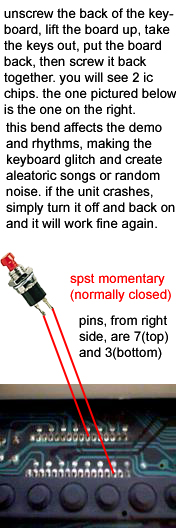
This is a glitch/random bend by Finlay Shakespeare http://www.futuresoundsystems.co.nr .
The mod was originally done on the casio sa1 but it should work with all the sa-serie.

Here is another random/glitch mod I found in a couple of forums:
game consolles and circuit bending, synthetizers
Yamaha PSS 390 mini synth demo
by synthvibrations • • 2 Comments

The Yamaha PSS 390 is the “toy keyboard” claimed to have the better and best sounding FM synth engine in the toy range.
It has 100 tones that can be widely modified with the tone controls, instead of button +/- it features sliders to edit the synth parameters.
The only lack is the midi control that however can be added by retrofit.
It can be seen in action in the videos of the band “the Apparat Organ Quartet”.
game consolles and circuit bending, synth tutorials
Circuit Bending the Casio SA-serie
by synthvibrations • • 3 Comments
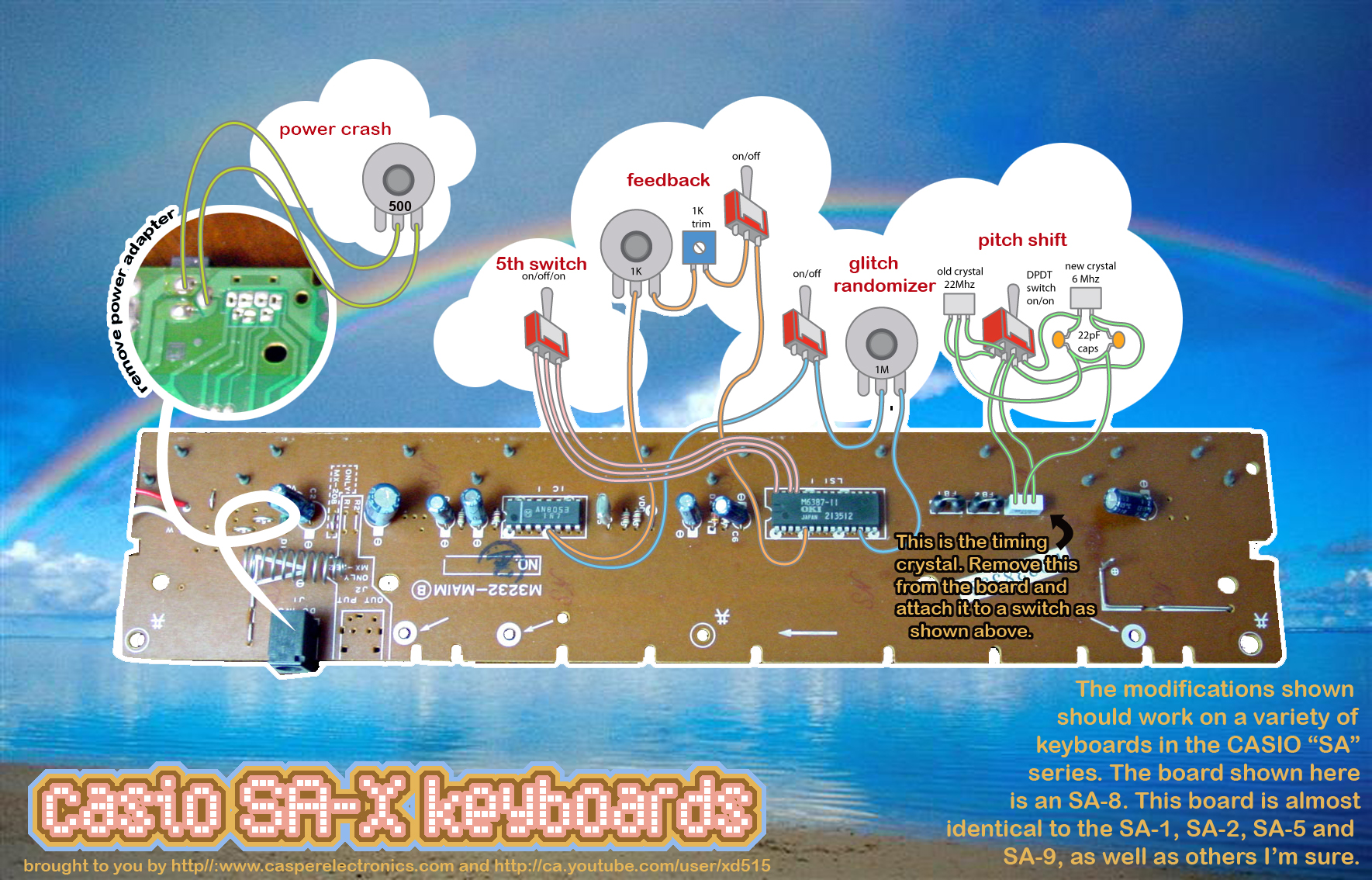
Doing some circuit bending on my casio keyboards I collected some useful schematics to “safe-bend” the casio sa serie (sa 1 2 5 8 10 20 etc).
The main mod is the one from Casperelectronics that adds interesting bends as the “glitch/randomizer” , “feedback” , “5th add”, “pitch shift” and the classic “power crash”.
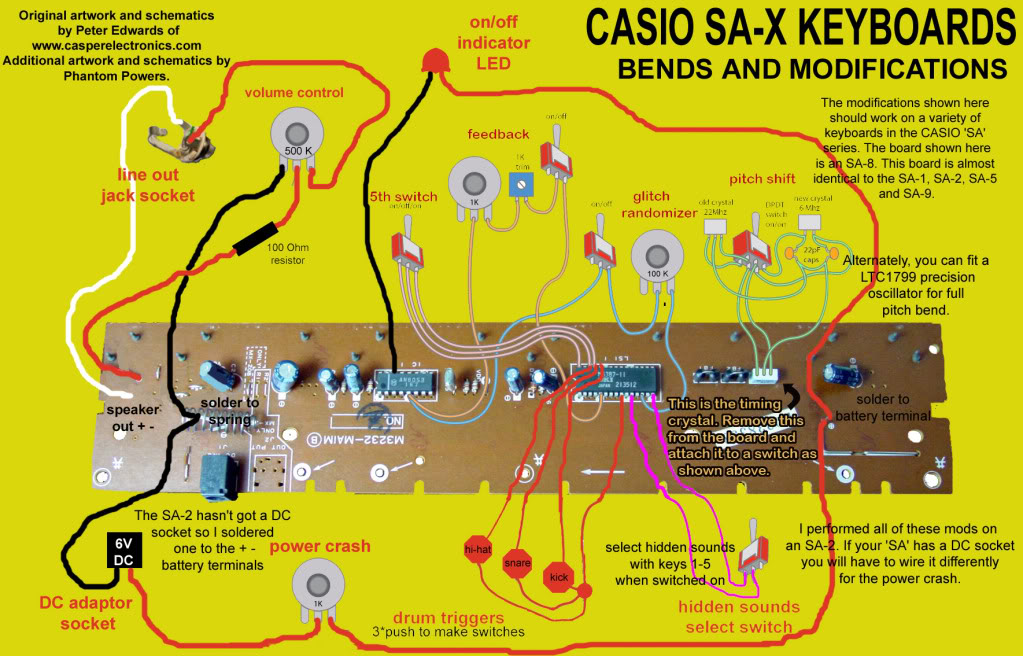
In the forum www.circuitbenders.co.uk I found another scheme based on the casper mod but with some adds.
game consolles and circuit bending, synth tutorials
Chiptune for dummies (part 2) Nanoloop
by synthvibrations • • 0 Comments
Nanoloop is a good alternative to LSDJ as a tool for making 8bit music on gameboys, even if it’s a sort of alter ego of Lsdj.
The sw is intended as a synth/sequencer with a really carachteristic layout.
It uses a grid of 16 step (4 x 4) and in every step there are two marks, as it shows various pages (pitch, envelope, modulations..), the position of the marks shows the value in a graphical way, no numbers.
The particular sequencer force the composition in a more electronic and particular way than LSDJ, that use a classic workflow, and the absence of sample player force the user to build rhythms using the synth parts as noise or wave.
I omitted to say that the sound engine is alway the same (2 x pulse, wave , noise like on every gameboy).
At first Nanoloop can seem a little tricky sw , but after a while I found it really “open on the sound creation” and useful to create loops but also experimental sounds.
The one I described is Nanoloop vers 1.x , the one for the old gameboys, but exist a a vers 2.x too that runs on GB Advance and DS/DS lite, that has a more complex structure and more synthesis potential as FM.
Nanoloop Vers 1
Nanoloop Vers 2
game consolles and circuit bending
Bliptronic 5000 LED Synthesizer
by synthvibrations • • 0 Comments
“Need a quick and dirty sequencer, or a fun and simple instrument with which to noodle? Bliptronic 5000 is here!”
http://thinkgeek.com/c4e1
The Bliptronic 5000 could be an interesting “music toy” , for 8bit,glitch or bending.
I think I’ll get it!!
game consolles and circuit bending, videos
Commodore 64 as bitcrusher audio effect!
by synthvibrations • • 0 Comments
game consolles and circuit bending, synthetizers
Midi SID : alternatives to the SidStation
by synthvibrations • • 0 Comments
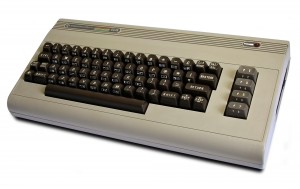
Commodore 64
The SID is a synthetizer chip built to give a “voice” to the classic home computer Commodore 64.
The sounds and music capabilities of the Commodore 64 were really ahead at that time, and everyone of us remember the tunes of tons of games played on the C64.
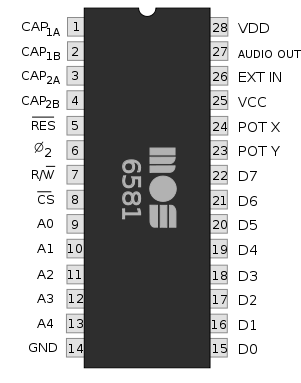
The SID (MOS6581)
The sound capabilities of the C64 were really appreciated by the demoscene movement during the 80s and early 90s, and even experimental electronic musician incorporated that sound in their compositions.
In the 90s a little synth manufacture started their businness building the first SID based synth, the SidStation.
The sidstation uses a single chip as voice generator.
When it first came out there was little interest in the machine, it was priced and sounded like a C64…
When people started hearing the sidstation sounds in pop or dance tracks understood the power of this little chip…
Today the Sidstation is a priced collectable piece of gear as they were made on a limited number (under 1000 units) and are out of production from years.
So the alternatives to get a midi controllable SID are a few…
- MIDIBOX SID (a Sidstation-like diy synth)
- HARDSID (a “sid engine” controllable thru usb)
- MIDIBOX WILBA (an evolution over the classic Midibox)
- MSSIAH (a midi controllable program on cartridge for the C64)