Archive for synthetizers

Yamaha PSS 390 mini synth demo

The Yamaha PSS 390 is the “toy keyboard” claimed to have the better and best sounding FM synth engine in the toy range.
It has 100 tones that can be widely modified with the tone controls, instead of button +/- it features sliders to edit the synth parameters.
The only lack is the midi control that however  can be added by retrofit.
It can be seen in action in the videos of the band “the Apparat Organ Quartet”.

Comments

my eurorack modular synth evolutions…

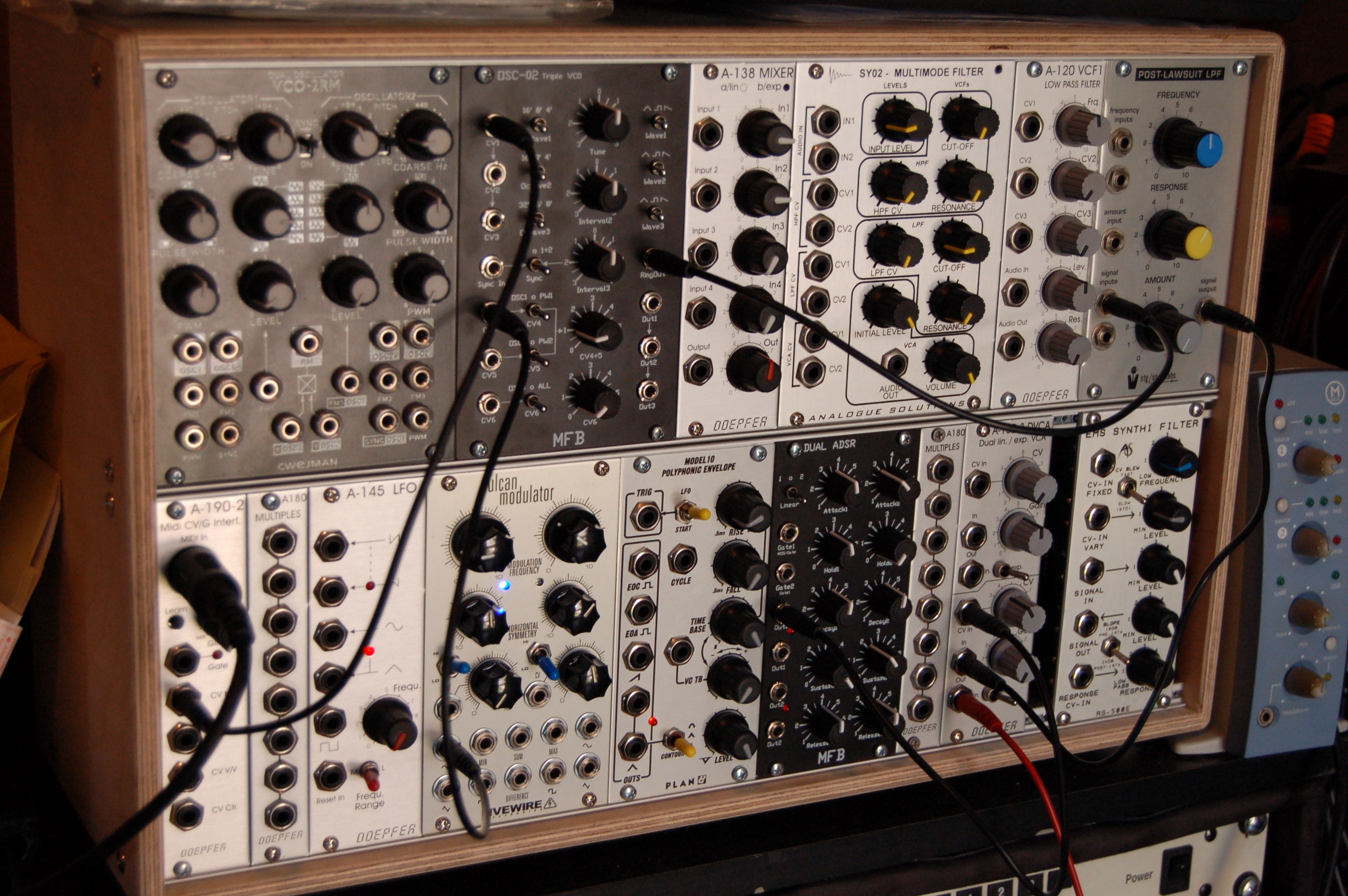
Just to keep you tuned about my eurorack modular system, this is my actual configuration:

  • Cwejman VCO2RM
  • MFB OSC 02 Triple VCO
  • Doepfer A138 mixer
  • Analogue Solutions SY02 Multimode filter
  • Doepfer A120 lowpass filter
  • STG Soundlabs “Post-lawsuit” LPF
  • Doepfer A145 LFO
  • Livewire Vulcan Modulator
  • PlanB Model 10 Polyphonic Envelope
  • MFB Dual ADSR
  • Doepfer A132-3 dual VCA
  • Analog Systems RS500E EMS Synthi filter

Eurorack

Comments (7)

Studio Electronics SE1 vs ATC1

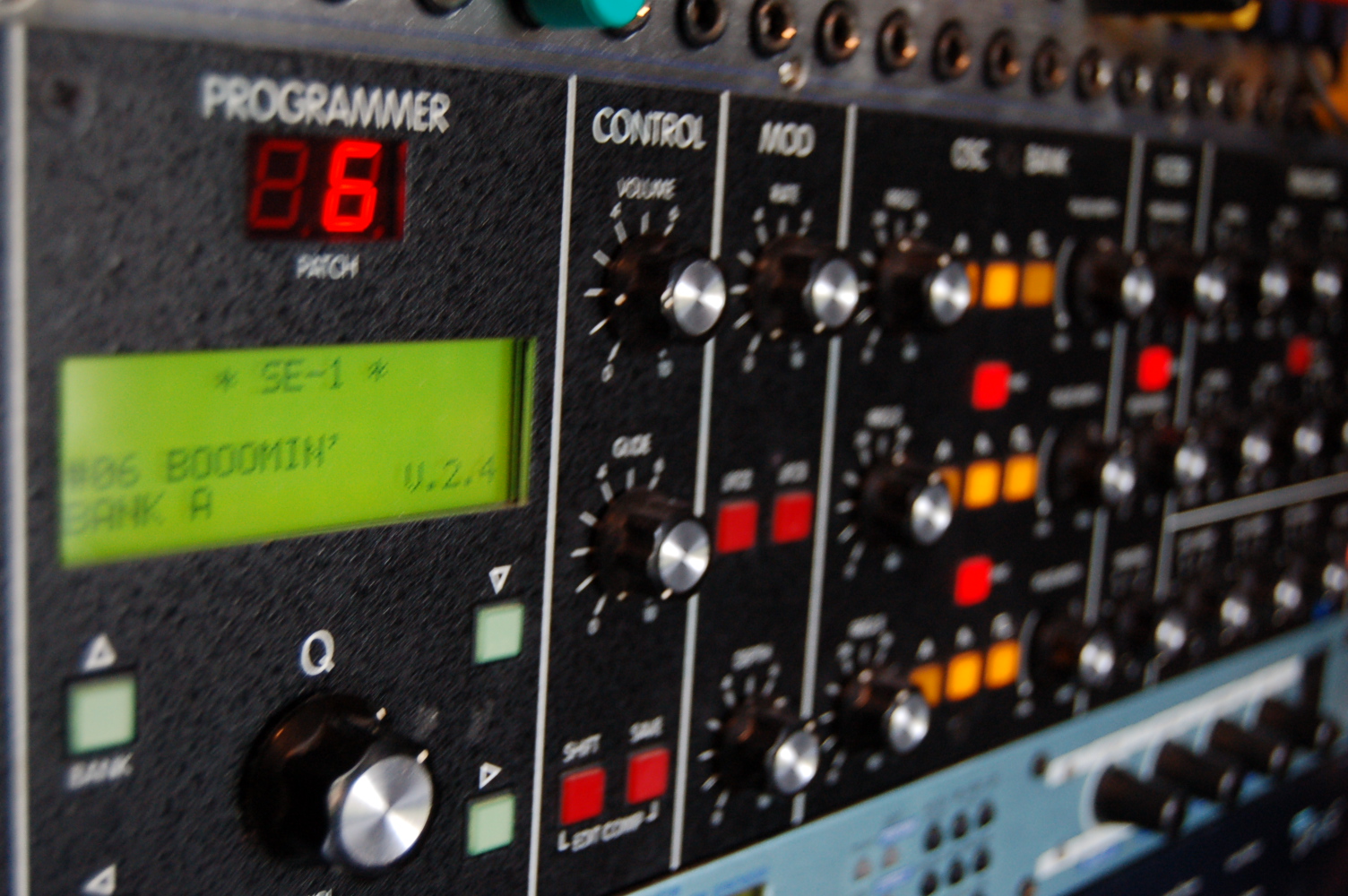
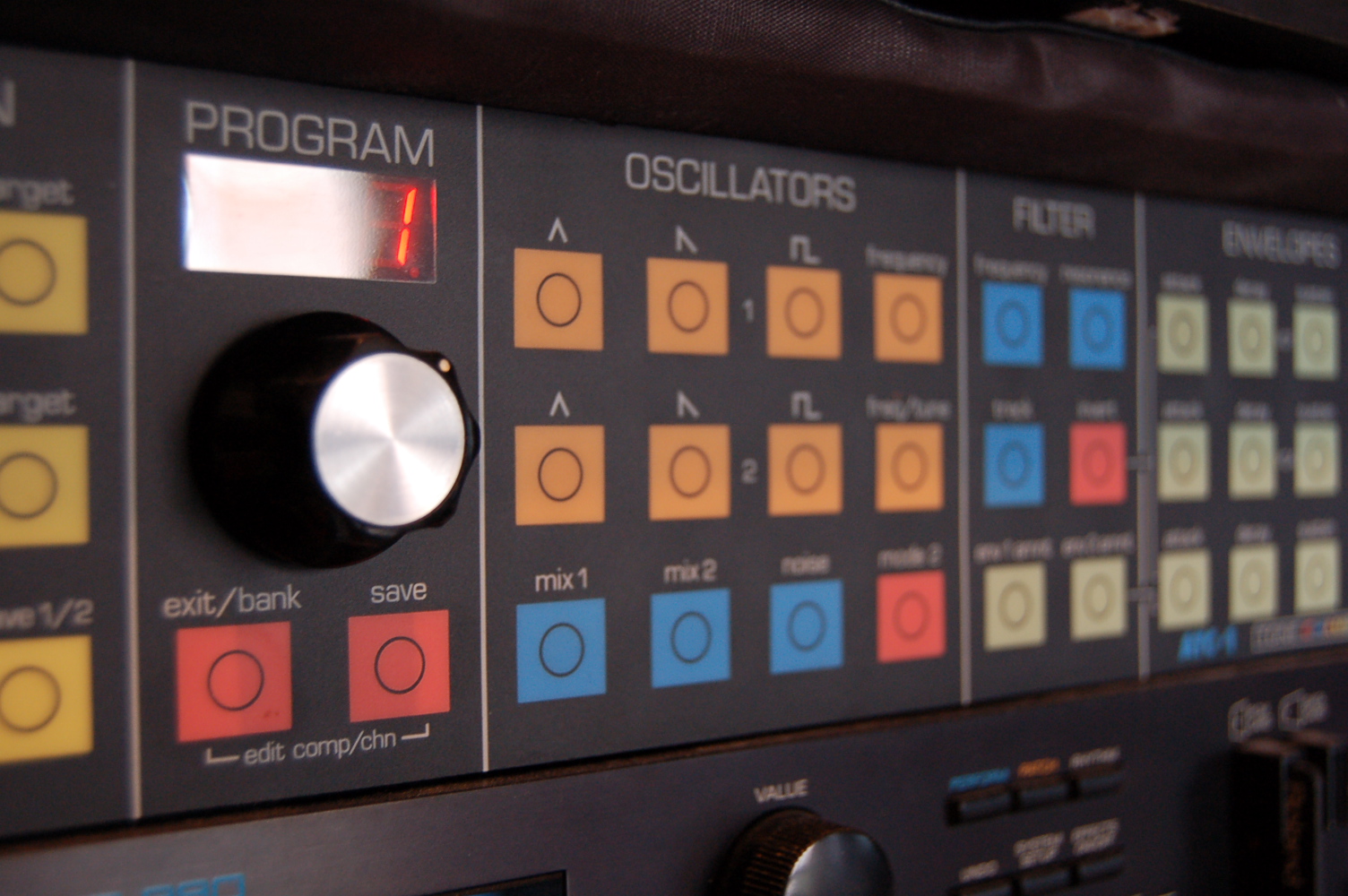
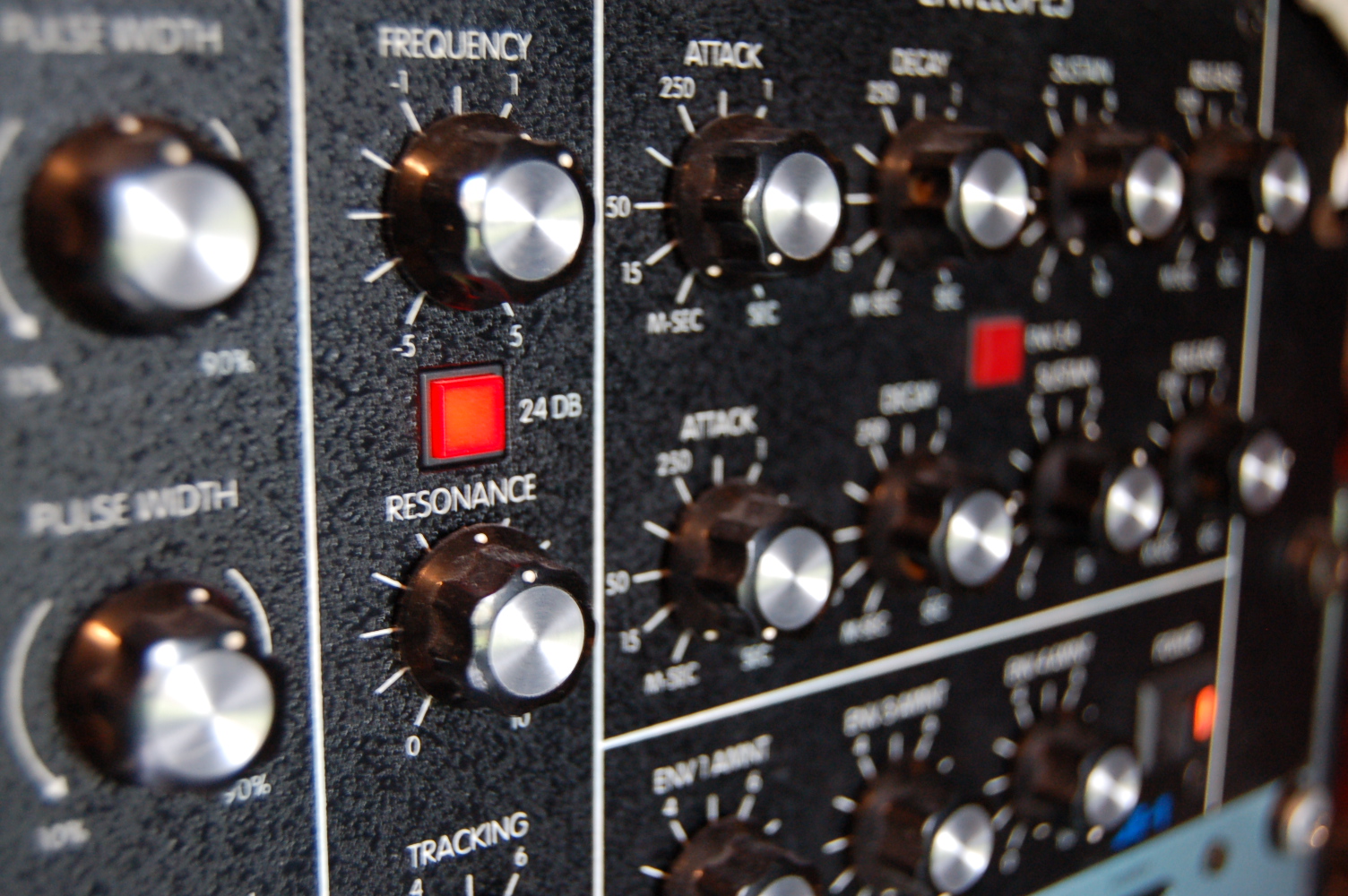
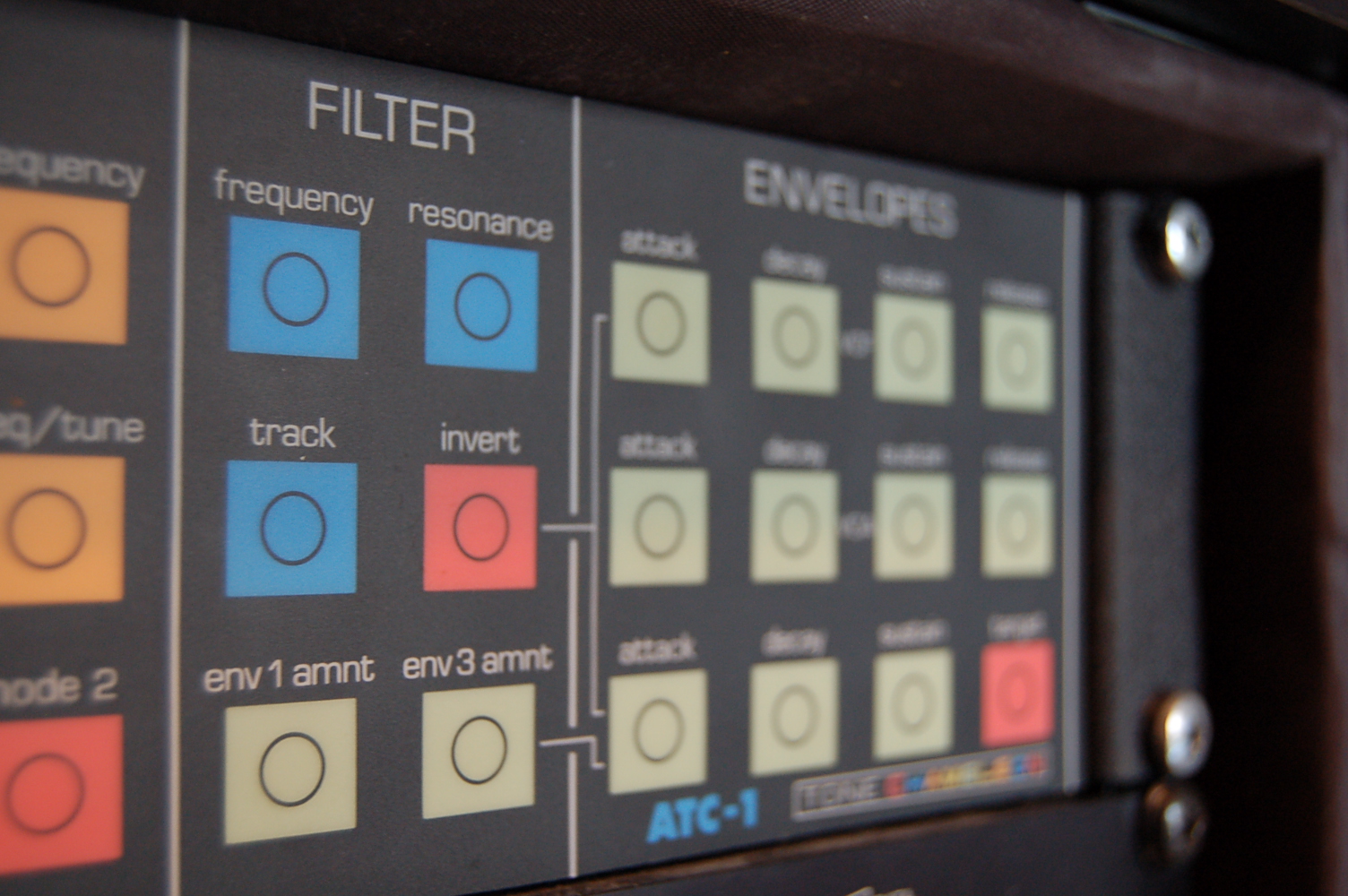
Usually people look at the  ATC-1 as a stripped down SE-1 , in fact looking at the specs the SE1 seems a top featured synth with 3 VCO, 2 filters , 4 envelopes, 3 lfo, ringmod, noise etc… while ATC-1 with its 2 VCO, 3 ENV , 2 LFO and a coloured push-membrane panel with one only knob does not look handy and full featured as its brother.
Comparing the two Studio Electronics side by side let’s get a totally different opinion.

Studio Electronics SE-1

The first thing to notice is the different “sound”, while the SE1 has a kind of boomin’ majesty the ATC1 sounds really snappy and more aggressive with a more “vintage” feel.
The VCOs  have different carachters, in the SE1 are regular and full of harmonics on the bass range, the ATC1 VCOs are more angular and grittier on the high frequencies.

Talking about the filters, testing both the SE1 and ATC1 with the MOOG FILTER, the SE-1 has a boomin’rounder sound, very powerful in the sub range, the ATC-1 has a more punchy percussive behaviour and a slightly bigger  response in the frequency cut off min-max gap, like if the filter could reach higher frequencies/ get more open.

studio_electronics_atc1_a

The ENVELOPE section is the part that more influences the sound together with the VCA.
The SE-1 has booming env , not really fast but really effective to get the presence and power on the bass frequencies range for basses and percussions and to get the smooth leads that are a part of the carachter of this synth.
The VCA on the SE1 is really warm and smooth, resulting in a really dinamic but always warm and clean sound.
On the ATC-1 the ENVELOPEs are really snappy and fast, and make the synth really percussive sounding, with an awesome power on punchy basses, not as deep as the SE1, but really kicking.
The ATC1 VCA is more raw and vintage sounding, it’s less smooth than the SE-1 but it results in some way more organic and alive.

studio_electronics_se1_filter

The big difference in the synthetizing capabilities is the CROSS-MOD present on the ATC-1 and absent on the SE-1.
This particular function that let the vco2 modulate the vco1 and/or the filter cutoff frequency let shine the ATC-1 in modular-type sounds, and is the main reason that make us understand that the ATC-1 is not the little brother of the SE1 but a totally weird machine with a target towards classic analog sounds but also for experimental stuff, while the SE1 is more on the classic and “safe” side of monophonic type of sounds.

studio_electronics_atc1_c

I don’t mean that the SE1 is a machine good only for simple sounds like basses or leads, it can get on experimental sounds too, but the cross mod on the ATC1 is far more effective and open to experimental sound creation.

Comments (1)

Roland MKS-50 (AlphaJuno) review

Roland MKS-50

Roland MKS-50

The Roland Alpha Junos was born as a mix between the old junos synth engine and layout and the dominating look of the Yamaha DX7, with touch membranes an push buttons and the infamous Alpha Dial (here comes the name Alpha Juno).
The absence of knobs or sliders at the time was considered sleek and futuristic (and even cheaper!) that’s way the alphas are quite overlooked today, but they are so much more than an old dark synth with an alpha dial..

The alpha juno (juno1, juno2 and mks50) is still a completely analog synth , with a really powerful and complex sounding DCO , a 24dB lopass filter, a multistage envelope, and the classic non resonant hpf, lfo and chorus common to the other juno family.

The DCO is  quite different from the prvious Junos, it has a various waveform to chose  from for the saw and the pulse wave.
In effect even the saw can be “PWMed” making it a really wide sounding dco.
If you need an extra bass response turn up the sub osc and you’ll get a really punch in the bass range!

The filter is a little different from the previous junos, first it’s resonant but does not reach self-oscillation (like the one on the Roland JX10P), it sounds a little harder and darker and creates really powerful sub bass frequencies.
Apart from the lack of self oscillation this is a really good filter, it sounds liquid and can cut the sound with great precision but it’s not clinical or sterile.

Roland Alphajuno 2

Roland Alphajuno 2

The ENV is part that makes the ALPHA serie stand up with the other Roland of the time.
The env is an advanced ADSR with time and level, so it delivers really fast attack sounds using the T1 at zero and L1 at max, and T2 L2 as decay.
For bass and percussive sounds is great because it can shape various attack and decay or sustain curves, being snappy or angular, at your will.
For pads has a good “long time” for musical pads but even for drones.

The LFO is quite basic , with the classic triangle wave only,with RATE and DELAY (reallly useful for leads or drones/pads).

The interesting point is that the PWM wave has its own rate and does not use the lfo for the modulation of the width , so you canm have a very low sweep  on filter and a fast mod on the PW.

The CHORUS is, as on the other junos a trademark, and having a rate control instead of the previous models that had only 3 preset chorus (off-slow-fast) can create interesting sounds interacting with the rate of the pwm and of the sweeps or vibratos.

The last TOP FEATURES , not present on the previous models are the “dynamics” control and the AFTERTOUCH over the filter cutoff control, VCA and the pitch control.
This is a great addiction making the Alpha a more expressive synthetizer even with classic keyboards technics, but also a easier  techno synth to be controlled by a sequequencer/daw, without using sysex if a filter motion is needed.

All in all a great synth that can sound a little harder than the 60&106, but that retain all the warmth and power of the others juno with added features.

Comments (4)

Yamaha CS01

Yamaha CS01

The CS-01 is a funky little synth!
It may seem a toy but is a real analog synth in a small case.
The structure is quite simple, justa simple LFO, a “VCO”, VCF and ADSR.
I wrote “VCO” because even if the yamaha labeled it VCO but it is in fact a DCO.
The sound of the oscillator is however real analog, and “phat sounding” in a typical japanese way, and it reminds the classic analog sounds of the early 80’s.
The oscillator offers a good selection of waves (TRI, SAW, SQUARE, PULSE, PWM) and feets(4′ 8′ 16′ 32′ and noise).
The most powerful is the sound of PWM, which is really fat and “wide” sounding.
PWM has its own speed control too (indipendent from lfo).
The LFO is only a tri wave useful for vibratos and wah effects, its not extremely fast, but works well for all the classic sounds.
VCO also have a “glissando” instead of portamento/glide, which means that it can jump from a note to another passing through the notes in the middle.
The VCF is a 12dB lowpass with resonance and EG depth.
The resonance is controlled by a switch that turns it on or off, but it’s possible to modify the control to have a real resonance control adding a knob.
On the MK2 model the filter use a different structure (it has a 24 dB slope instead of 12) and has the resonance controlled by a slider.
The filter is, as other  old yamaha monosynth, very smooth and “bubbling”, even with resonance tutned on the filter never eat the low frequency range, offering a wide variety of colour even as a bass machine.
The CS01 is mainly a bass and lead machine, the bass is always rounded, and punchy, for the classic 80’s arpeggio or for techno bass sounds.
On the lead side it can sound quite minimal and smooth or rich using the pwm, it can also reproduce easily the classic retrocomputer  sounds !
Despite the toys look with the built in speaker this a lightweight classic 80s monosynth that can do most of the analog mono-sound without any problem of space in the studio and being very reliable.

Comments

Moog Prodigy – review

Moog Prodigy

When it came out in the late 70s the Moog Prodigy was the moog attempt to fight the “japanese invasion”, so it was a stripped down version of the minimoog at a competitive price.
It was really popular indeed and was a big american “budget-Mini”  till Sequential Circuits made the Pro One.

The structure is quite simple: a 2 syncable VCOs with the classic 24dB moog ladder filter, two ASD/R and a simple lfo.
The two vcos are similar but they have different waveforms and different “feet”  settings.
VCO1 has the 32′ and offers Pulse, Saw and Tri waveforms.
VCO2 has the 4′ and TRi, Square and Saw.
The second vco has a detune knob and can be synced to vco1 creating many complex waves (a feature unavailable on the Minimoog).
Using the Pitch Wheel with the sync on , the wheel “move” only the VCO2 creating big alterations in the waveform content.
Than there is a mixer/vca part , the Filter with cutoff, (env)Amount, and Emphasis (resonance) and the two envelope ADS/ASR.
The LFO is quite simple and offers square and tri waves with a rate control that can go from 0.3Hz to 30 Hz, not the faster or slowest lfo, but really useful.

moog_prodigy2

The most interesting part of this synth is the behaviour of the filter that is indeed the strengh of all moog synths, a really organic, warm and brilliant sounding!
It sounds always balanced, the resonance can get quite acid and never get thin.
The vcos are really capable, rich and armonic over all the audio spectrum, and the sync is a top notch feature in a simple synth because the vcos interact very well creating complex waveforms that sound always usable.
The behaviour of the envelopes is really interesting, they are snappy and fast, but they move in a really organic and “natural” way.
Even the 3 stage concept is not limitating at all.

All in all this is a great vintage synth that is always quite cheap compared to the always rising prices of  Minimoogs, and though it may seem quite basicv/simple, getting in depth with it  can lead to a very wide range of sounds,  some even  typical “Prodigy trademarks” , not only mini emulations…

moog_prodigy3

Compared to the new analogs (moogs and moog clones)  the prodigy has a particular fashion that set this synth aside from the new generation, and it’s all about the sound!
While the Prodigy has a raw but harmonic sound that’s always present and creamy, today’s synths are more “bright” but not brilliant, the sound is cleaner and more defined, when you turn the cut off down they are smooth and quite flat/static , while the prodigy always seems to oscillate wildly under its wood and metal case…

moog_prodigy4

My prodigy has two interesting MODS.

  • FILTER FM : the vco2 can modulate the filter frequency creating wild sounds, from vocal-like textures to noise or drones.
  • CV-GATE MOD : a standard cv-gate interface instead of the moog s-trig.
    I chose to have this mod because my model (an early BX336) did not have any control socket.

I’ll provide photos of the mods in a future post ;-) , stay tuned!

moog prodigy wheels

Comments (8)

Clavia Nord Micromodular – overview

clavia micromodular

The little red metal box is really the pandora’s box…
Basically the micromodular is a dsp programmable virtual modular synth with 24bit 96KHz audio conversion.
The box is little but solidly well built, there are a stereo output, stereo input, a couple of midi ports for midi control , a couple of midi ports to “pc control”, dedicated to the editor.
On the front we have four knobs (volume+3 assignable controllers) and 3 buttons.
The interface is quite minimalistic because the instrument is thought as a small/lighter version of the Nordmodular and the aim is to control it by sw and midi controllers.

It’s quite difficult to start a description of a so open-ended and complex instrument, I’ll try to keep things simple…
When you open your editor on the pc/mac it will show the current patch (the micromodular is a monotimbral instrument).
The modules are grouped in categories and it offers from the classic oscillators, envs, lfos, and all the classic “analog-modular modules” to the newest digital effects like bit reducing, warp, digitizer…
This thing is like a little reaktor in a box with an awesome sound.
It can do classic synth sounds with a little of modular twist as well as complex rhythmic morphing and glithching.
The original editor from clavia is compatible till windows XP, but now a free java editor is available , NOMAD .
Nomad let you edit the nordmodular serie with every system that supports java.
The nordmodular serie is not dead, clavia will not add new modules, but the instrument is alive with nomad!

clavia_micromodular2

Comments

PlanB Model 10 – polyphonic envelope

Plan B Model 10
Plan B Model 10

The PlanB model 10 is a multifunctional module, not only a simple envelope.
The name “polyphonic envelope” does not describe the functions of this great module, the reason why they called it “polyphonic” is because it can output 4 different type of voltage “envelope” at the same time.
In fact the M10 is way more versatile than an envelope, this is really similar to the Bananalogue VCS module, a multitask voltage controlled cv generator .

The main task is the ENVELOPE.
The envelope consist of an AD env with RISE (0.5 ms-5 min attack)and FALL (0.5 ms – 5 min decay/release) controlled not by gate signals but by Triggers.
The attack and decay time can stretched x8 times their duration with the TIMEBASE control knob (so the complete envelope can last from 0.5 milliseconds to 20 minutes).
You can stretch the time manually just turning the knob or controlling it with the VC TB (voltage control timebase).
The VC TB can act in positive or negative, so it can add or subtract.
Than there is the level of the env, which is bipolar too , so it can act as a positive or inverted envelope.
On the left there are the 5 connectors for the 4 different envelopes generated:

  • EOC
  • EOA
  • RAMP
  • 2x AD (with ad contour switch)

The AD acts as the classic “trig” envelope, with 3 different contour (log, lin, exp).
The RAMP is a ramp with rise time 2x the RISE control time.
The EOA is a sustained square which falls when receive a trig and performs the AD cycle  at the “End Of Attack”.
The EOC acts as the EOA but the AD starts at the End Of Contour.

LFO MODE

The rise-fall cycle can be looped and can also work as an lfo.
Using the rise and fall it can produce various waveform between the tri, square, saw, ramp…
The interesting thing is that the timebase knob can control the time of the lfo, so it a vc lfo, the other thing that can lead to creative results is the fact that the rate of the lfo is not controlled by the timebase only, but it ’s a mix of the rise and fall time.
So the shorter is the R&F the faster will be the lfo rate.

VCO MODE

The third interesting mode is the vco function.
The module has a  triangle-core , so it can sound useful even as a vco.
To get the vco mode  you have to switch into LFO and use fast R&F time and “tune” the oscillator with the timebase function and VC TB to control it with a keyboard cv.
It does not reach very high frequencies but can be used on the low and mid range as an audio modulator or a audio source.

TIPS:
I noticed two useful tips:

  • As the core is a TRI-core the envelope create a sort of clip when, reached the max value,start the fall.
    To avoid the clip it’s useful to use a lowpass filter post the VCA.
  • In LFO mode don’t connect any source to the trig in because the summing of the two sources can damage the module , too high voltage!

Comments

Midi SID : alternatives to the SidStation

Commodore 64

Commodore 64

The SID is a synthetizer chip built to give a “voice” to the classic home computer Commodore 64.
The sounds and music capabilities of the Commodore 64 were really ahead at that time, and everyone of us remember the tunes of tons of games played on the C64.

The SID (MOS6581)

The SID (MOS6581)

The sound  capabilities of the C64 were really appreciated by the demoscene movement during the 80s and early 90s, and even experimental electronic musician incorporated that sound in their compositions.

In the 90s a little synth manufacture started their businness building the first SID based synth, the SidStation.
The sidstation uses a single chip as voice generator.
When it first came out there was little interest in the machine, it was priced and sounded like a C64…
When people started hearing the sidstation sounds in pop or dance tracks understood the power of this little chip…

Today the Sidstation is a priced collectable piece of gear as they were made on a limited number (under 1000 units) and are out of production from years.
So the alternatives to get a midi controllable SID are a few…

  • MIDIBOX SID (a Sidstation-like diy synth)
  • HARDSID (a “sid engine” controllable thru usb)
  • MIDIBOX WILBA (an evolution over the classic Midibox)
  • MSSIAH (a midi controllable program on cartridge for the C64)

Comments

Casio SK-5 review

Casio SK5

Casio SK5

The Casio SK serie started with the SK-1 (one of the best selling toy keyboard of the period) and the target was a the consumer market.
The little sampler was technically far from the professional counterpart like Emu or Akai, it was just a toy with a tiny memory of few seconds and no memory retain.
Soon after the SK1 the SK5 followed.
The sK5 was an upgraded version of the SK1 with more sampling time, the capability to sample 4 sounds and to retain the sound in memory even with the power swithed off (if the keyboard run on batteries).
The sampling specifics were the same as the SK1 (8bit- 9,38KHz) quite low even for the time, and apart from didattic use by children, the sk seemed at that time just a toy.

The cheap prices of second hads SK and the “Anti Theory” of Reed Ghazala made the fame of the little sk grow.
The interesting circuit bending capabilities of this instruments made them popular between the circuit bending community as a “must have” together with the  “Speak & Spell”.

The Antitheory statement , by Reed Ghazala, is that you don’t have to know anything about electronics to do circuitbending.
A circuitbend is like an energy flow thru shortcircuits…
A circuit is not designed to have shortcircuits , so you have to “think different” !

The SK5 is now a well known and is now considered  a “real instrument” , not just a toy, after many more or less inportant, famous or trendy artists used it.
Just to name a few…Autechre, Bjork, Portished, Nine Inch Nails , Blur, Aphex Twin, but the list is long…

The heart of the instrument is a 8 bit sampler with a very lo-fi sound and 4 voice poly.
It can samples 4 sounds and play them together with the rubber pads or with the keyboard.
The performance can be registered with the onboard sequencer, with no quantization (you cannot correct the timing).
Every sample can be edited with the “envelope shapes” that adds crescendo, sustain, vibratos etc., can be looped or reversed .
The sample memory can retain the samples if the keyboard has batteries.
There is also the possibility to choose a “long sample” time (it occupies 2 samples slots) to sample a loop for example.

The strenght of this keyboard is without any doubt the sound, because the samples are totally mangled and they sound really different , like pixelated…
This is really great for lo-fi sounds.
The second point is that the SK 5 is an easy instrument to circuit bend and the mods add a great variety of  “tools” to shape new sounds with the twist of a knob or a simple switch, a variation not known, an aleatoric change, that’s why Ghazala called his mods projects “aleatrons”.

Comments (2)

Get Adobe Flash playerPlugin by wpburn.com wordpress themes